A little rusty? Let's go over the basics. We'll work through a hand, sort out the card values and see what happens to your stake when you win, split or double.
How Blackjack Works
What Is Online Blackjack?
Online blackjack is the digital version of the classic table game you've seen in movies or played down the pub. Your goal is to beat the dealer without going over 21. Getting 21 is lovely, but you can win with 18 against 17, or with a surviving 12 when the dealer busts under ordinary rules.
What I like about blackjack is having a say in the hand. Knowing when to hit, stand, split or double makes a difference, and basic strategy helps you choose.
Blackjack Rules in a Nutshell (or How to Play)
Let's take it step-by-step:
- Pick a table and check the rules. Choose your main-hand stake. Leave optional side bets alone until you understand their separate terms.
- The cards arrive. You receive two cards. The dealer shows an upcard and, in a hole-card game, has another face down. No-hole-card versions deal differently.
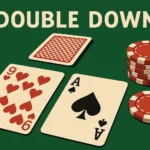
- Make your decision. Hit means another card; stand means stop. Double means add a matching stake, take exactly one more card and stop. Split means turn a qualifying pair into two hands, usually adding a matching stake. Surrender, where offered, gives up the hand for half the stake back.
- Stay at 21 or below. If you bust first, you lose the main hand even if the dealer later busts.
- The dealer follows fixed rules. They hit totals below 17, then follow the table's soft-17 rule. They do not choose whether to hit based on your score.
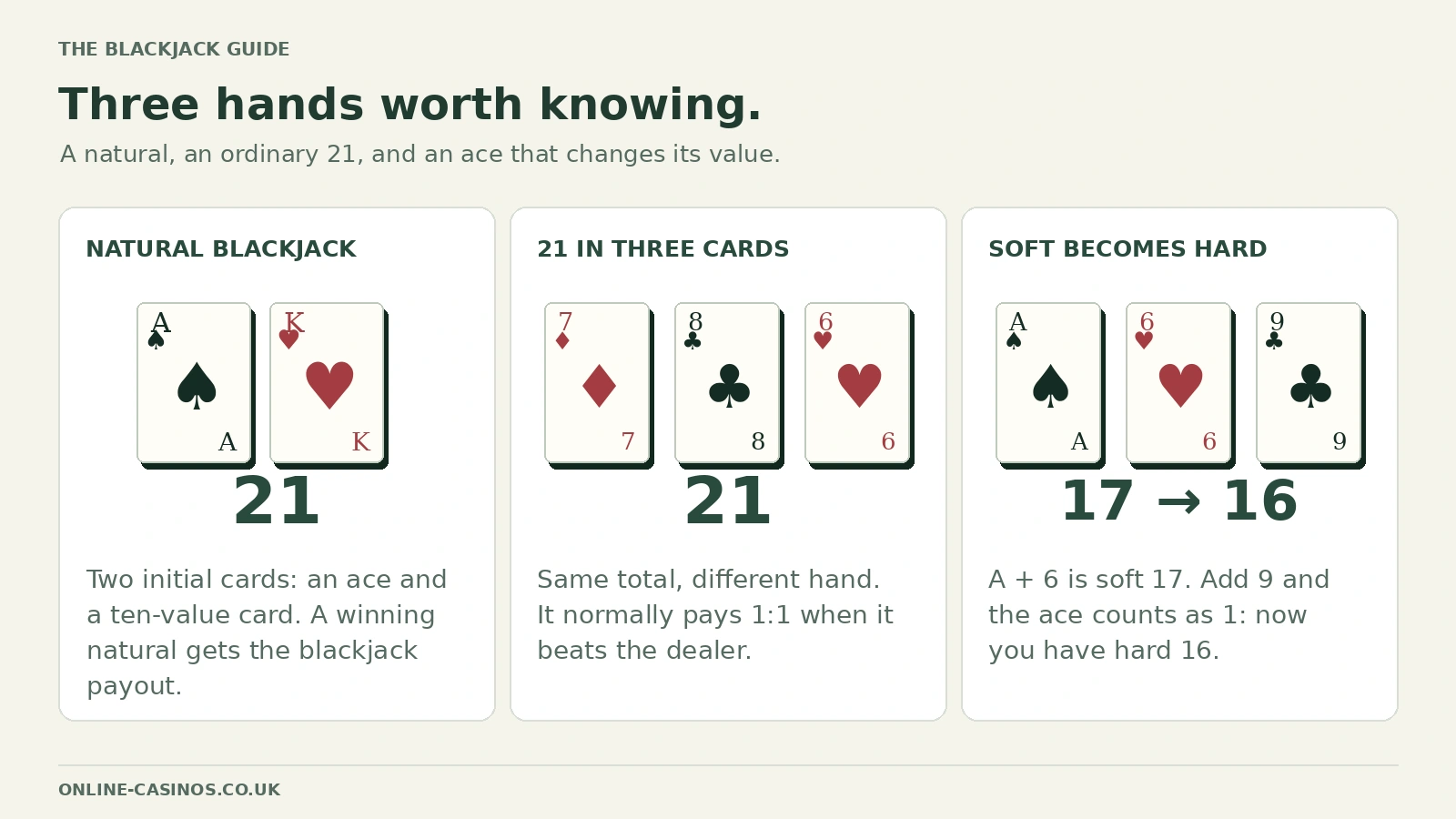
- Settle the hand. A higher surviving total usually pays 1:1. Equal ordinary totals push, returning your stake. A natural blackjack is an ace plus a ten-value card on the first two cards; at a 3:2 table it pays 3:2 unless the dealer also has a natural, when it normally pushes. A three-card 21 is not a natural.
Blackjack Card Values 101
Here's a quick and simple breakdown:
Number cards: 2-10, worth their face value.
Face cards: J, Q, K, always worth 10 points.
Ace: A, worth 1 or 11 points, depending on which benefits your hand more.
Now, you do the maths.
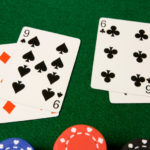
A soft hand has an ace counting as 11: A-6 is soft 17. Add a 9 and the ace becomes 1, leaving a hard 16. A hard hand has no ace counted as 11. That is why two hands showing the same total can need different decisions.
What Does Blackjack Actually Pay? Try the Numbers
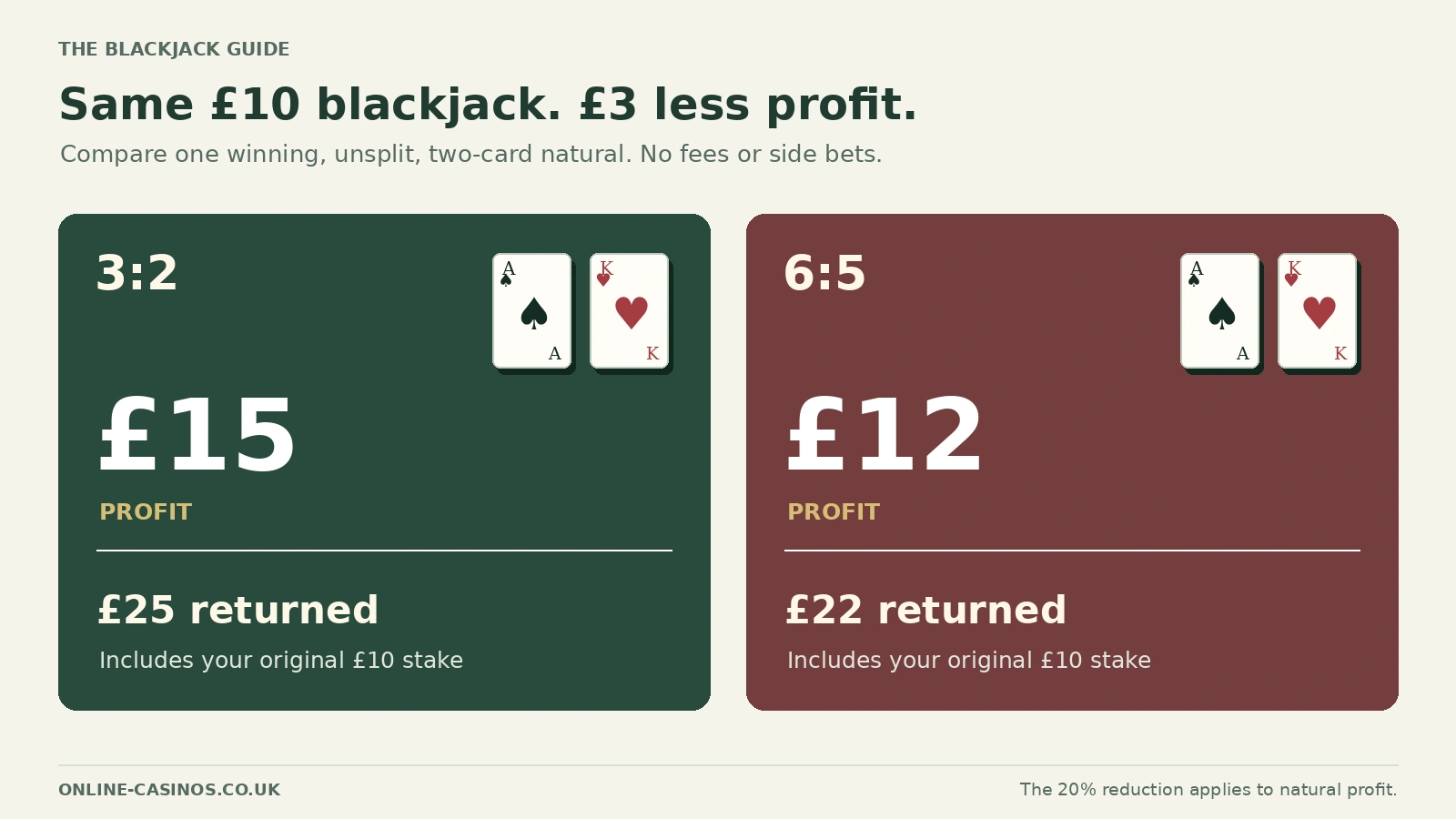
I look for 3:2 blackjack. On a £10 bet, a winning natural pays £15 profit at 3:2 and £12 at 6:5. That's 20% less profit for the same hand.
3:2 versus 6:5 payout calculator
Compare one winning, unsplit, two-card blackjack. No fees, side bets or promotional chips.
| Result | Profit / loss | Total returned |
|---|---|---|
| Ordinary 1:1 win | +£5 | £10 |
| Natural paying 3:2 | +£7.50 | £12.50 |
| Natural paying 6:5 | +£6 | £11 |
| Push | £0 | £5 |
| Loss | -£5 | £0 |
| Surrender, if allowed | -£2.50 | £2.50 |
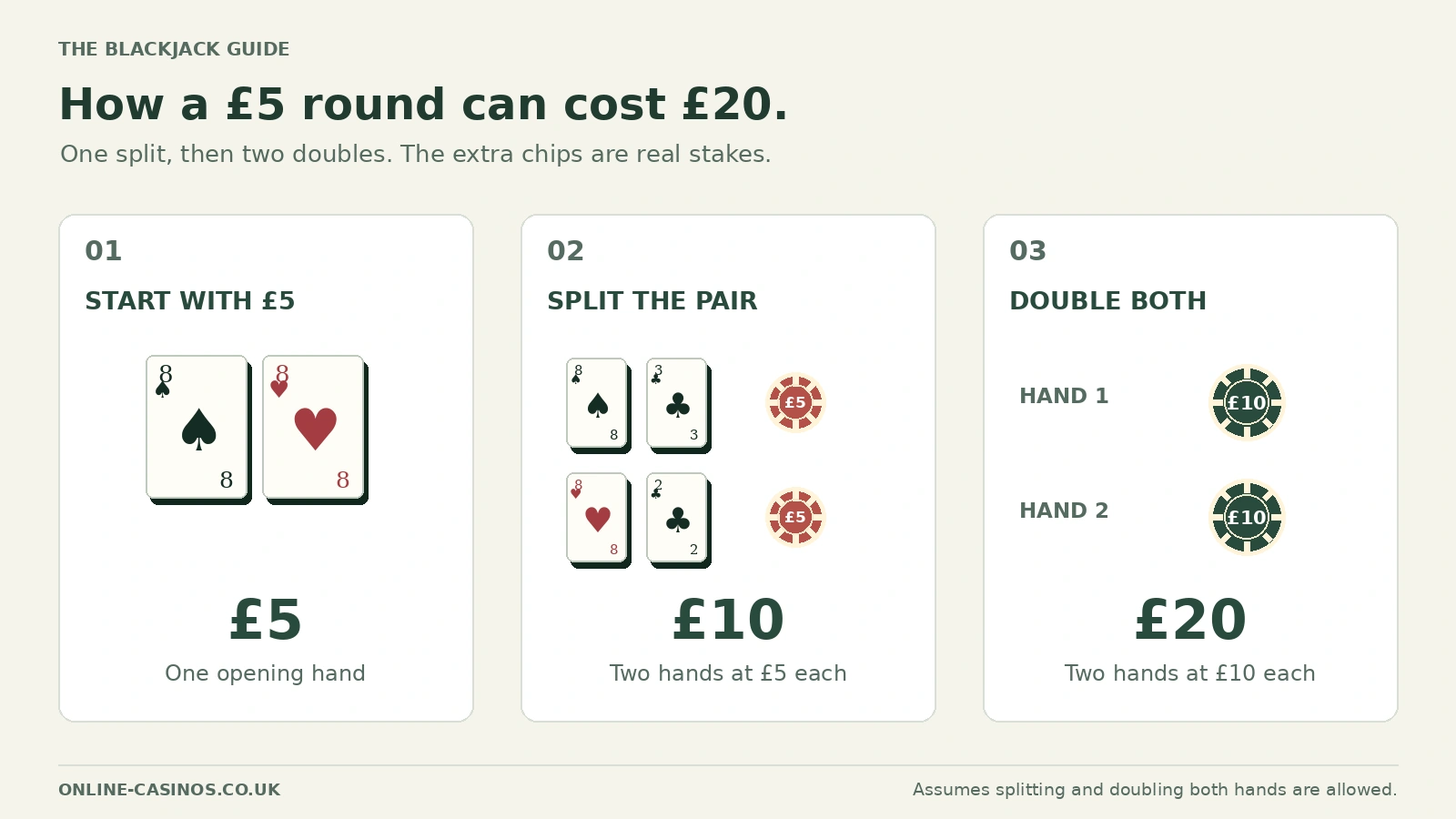
How £5 becomes £20: at a table that allows doubling after a split, split a £5 pair into two £5 hands, then double both. You've now put £20 into that round. Playing three hands at £5 each starts at £15, before any splits or doubles.
Before You Sit Down: The Eight-Rule Blackjack Check
I have a quick look at these before choosing a table. You'll find them in the game's help panel.
| Check | What it means | Why I care |
|---|---|---|
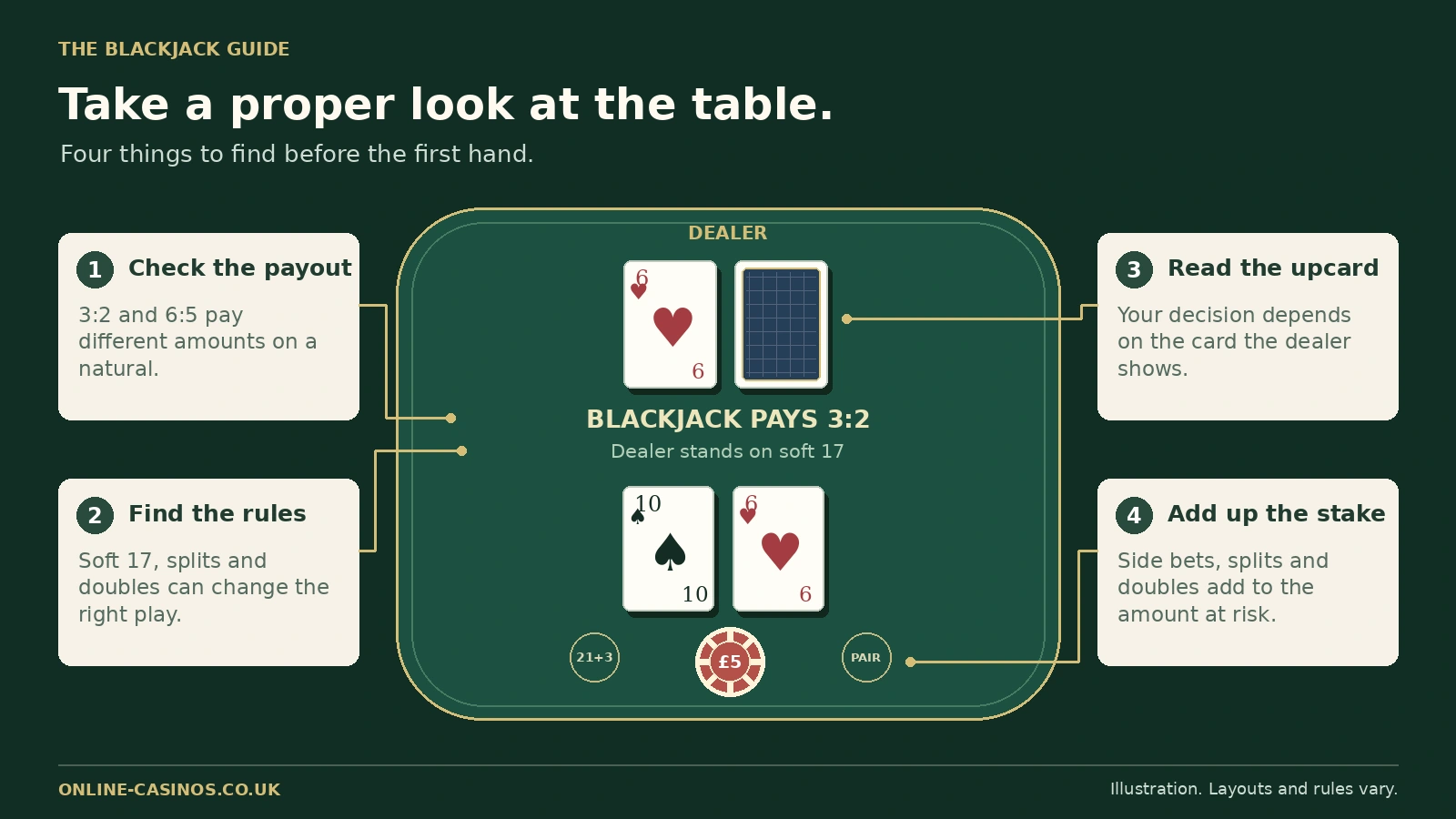
| 1. Natural payout | 3:2 or 6:5? Is it a two-card blackjack? | At £10, 3:2 pays £15 profit; 6:5 pays £12. That is £3 less on the same winning natural. |
| 2. Soft 17 | S17 = dealer stands on A+6. H17 = dealer hits it. | Other rules equal, standing on soft 17 is better for the player. Strategy also changes. |
| 3. Dealer blackjack | Peek before your decisions? No hole card? Only the original bet lost? | If a later dealer blackjack also takes split and double bets, some decisions change. |
| 4. Doubling | Any initial two cards, or only certain totals? Double after a split? | Restrictions remove useful options. DAS means double after split. |
| 5. Splitting | Which pairs? How many hands? Can you re-split aces? | Split aces often receive one card each. An ace plus ten after splitting usually pays 1:1. |
| 6. Surrender | Available? Early or late? | This returns half your stake under the specified conditions. Many online tables do not offer it. |
| 7. Decks and special rules | Deck count, shuffle, dealer-22 push, removed cards, Charlie wins. | A familiar-looking table can need a completely different strategy. |
| 8. Total stake | Main bet, side bets, fees, extra hands and table maximum. | A £5 chip may commit much more than £5 once you add the extras. |
RTP depends on the game's rules and the strategy you use. Side bets have their own paytables and returns.
RNG, Live, First Person or Speed: What Are You Actually Playing?
You can play at your own pace, join a live table or speed things up. Here are the main formats.
| Format | How it works | The practical difference |
|---|---|---|
| Digital / RNG | Software generates the cards. Usually you control when to start the next round. | Useful for learning the controls, with demo play available on some games. |
| First Person | Evolution's animated RNG format, with a link to live games where available. | Start with the animated game, then switch to a live dealer from the same interface. |
| Seated live blackjack | A human deals physical cards on a stream, with a limited number of main seats. | You follow a betting timer. |
| Unlimited / Infinite | Many players can join; often they share starting cards and make their own decisions. | No ordinary seat queue. Your decisions determine how your hand develops. |
| Speed blackjack | The dealing or decision process is shortened. | Less thinking time. More rounds can mean more total wagering, even with the same chip size. |
| Multi-hand | You play more than one main hand in a round. | Three £5 hands cost £15 before splits, doubles or side bets. |
On a phone, make sure you can read the payout, see the total stake and reach the decision buttons easily. Live video needs a steady connection; the game rules explain what happens if your timer runs out or the connection drops.
Blackjack Variants: Classic, Free Bet, Power and More
There are classics you know and like, as well as a good few twists to spice things up. Here's how their rules differ.
| Game or rule family | What changes | What to check |
|---|---|---|
| Classic blackjack | Ordinary hit, stand, double and split decisions; natural payout and table rules still vary. | Use a strategy chart matching the decks, soft 17, doubling and dealer-blackjack rules. |
| European / no-hole-card rules | The dealer may take the second card after players have acted. | Check whether a dealer blackjack takes all split/double wagers or only the original bet. |
| Evolution Infinite Blackjack | Unlimited players share the initial hand but make their own decisions; includes Six Card Charlie. | Six cards totalling 21 or less win under the Charlie rule. |
| Free Bet Blackjack | Eligible doubles and splits are funded by the game. Your opening bet is still real money. | Common versions offset the free bets with a dealer-22 push. Check the exact version and exceptions; use its own strategy. |
| Evolution Power Blackjack | All 9s and 10s are removed; J, Q and K remain. Double, triple or quadruple down is available on initial two-card hands, including after a split. | A different deck and betting structure. Use a Power Blackjack strategy chart. |
| Evolution Lightning Blackjack | A mandatory Lightning fee and multiplier mechanism change the stakes and payouts. | The original live version charges 100% of the initial bet as a fee. £5 plus a £5 fee means £10 committed before extras. |
Provider references: Infinite, Free Bet, Power and Lightning.
Side bets: Perfect Pairs looks for a pair in your starting cards. 21+3 uses your two starting cards and the dealer's upcard to make poker-style combinations. They settle separately from the main blackjack hand. You can win one and lose the other, and the paytable and house edge are separate.
Put the Rules Into Practice
Once you're comfortable with the controls, try a few hands in free blackjack. You can get used to splitting and doubling without putting money on the table.
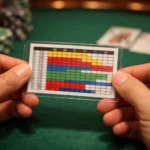
For the decisions themselves, use our basic blackjack strategy chart and hand checker. Match the settings to your game before checking a hand. When you want to compare actual tables and stakes, head to my online blackjack casino shortlist.

- Blackjack Rules: How to Play, Card Values and Payouts - October 13, 2026
- No Bust Blackjack Explained - August 18, 2026
- Card Counting in Blackjack – Is Card Counting Illegal? - August 24, 2026