A blackjack split turns a pair into two separate hands. You add a second bet equal to the first, then play each hand against the dealer. The useful question is whether separating those cards gives you a better decision than keeping them together.
Two eights and two tens are both pairs, but they need very different treatment. Eights make an awkward 16; tens already give you 20. Below you'll find a split chart, a worked £5 example and the table rules that can change the answer.
What is a split in blackjack?
When your first two cards form an eligible pair, you can separate them and place an equal additional stake. Each original card starts a new hand. The dealer deals further cards, and the two hands are settled separately against the same dealer hand.
Most ordinary games allow cards of the same value, so a king and a queen may qualify because both count as ten. Some require the same rank instead. Being allowed to split a pair does not mean that splitting it is the best play.
You normally choose before taking another card. A three-card total of 16 cannot be split just because it adds up to the same number as 8 + 8. For the rest of the game's decisions, our blackjack rules guide covers card values, hitting, standing and payouts.
How to split in blackjack: a £5 example
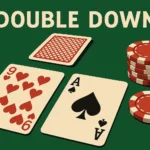
Suppose you bet £5 and receive two eights against a dealer 6 at a table using the chart rules below.
- Choose Split. In an online game, select the Split button while the decision is available. At a physical table, place the matching chips as instructed by the dealer.
- Add another £5. You now have £10 committed: £5 on each hand.
- Play the first eight. If it receives a 3, that new hand totals 11. Your next choice depends on whether doubling after a split is permitted.
- Play the second eight. If it receives a king, it totals 18. This hand has its own decision and stake.
- Settle both hands. You might win both, lose both, win one and lose the other, or push on a hand.
Example total: 11
Example total: 18
If you then double the first £5 hand, you add a further £5. That puts £10 on the first hand and £5 on the second, for £15 in total. The Split button creates another hand; the Double button increases the stake on one hand and gives it one final card.
Blackjack split chart: which pairs should you split?
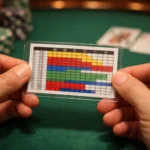
Standard 4-8 deck blackjack; dealer stands on soft 17 (S17) and checks for blackjack before you act; doubling is allowed on any initial two cards; no surrender. It assumes normal resplitting up to four hands, except aces, and one card to each split ace. The starred cells depend on whether doubling after a split (DAS) is allowed.
Find your pair on the left and the dealer's visible card across the top. A means ace; 10 includes any ten-value dealer card. These are initial-pair decisions, not a chart for every blackjack variant.
| Your pair | 2 | 3 | 4 | 5 | 6 | 7 | 8 | 9 | 10 | A |
|---|---|---|---|---|---|---|---|---|---|---|
| A + A | P | P | P | P | P | P | P | P | P | P |
| 10 + 10 | S | S | S | S | S | S | S | S | S | S |
| 9 + 9 | P | P | P | P | P | S | P | P | S | S |
| 8 + 8 | P | P | P | P | P | P | P | P | P | P |
| 7 + 7 | P | P | P | P | P | P | H | H | H | H |
| 6 + 6 | P* | P | P | P | P | H | H | H | H | H |
| 5 + 5 | D | D | D | D | D | D | D | D | H | H |
| 4 + 4 | H | H | H | P* | P* | H | H | H | H | H |
| 3 + 3 | P* | P* | P | P | P | P | H | H | H | H |
| 2 + 2 | P* | P* | P | P | P | P | H | H | H | H |
P: split. P*: split if DAS is allowed; otherwise hit. H: hit. S: stand. D: double if allowed; otherwise hit.
For all the hit, stand and double decisions beyond pairs, open our full blackjack strategy chart. Its rule settings matter too: changing the table rules can change a correct decision.
When to split each pair
Aces: usually the first pair to learn
Under the chart rules, split two aces against every dealer upcard. Kept together, they make a soft 12. Separating them gives each ace its own chance to form a stronger hand, usually with just one further card allowed.
An ace followed by a ten after splitting normally makes an ordinary 21. It does not become a natural blackjack paying 3:2. That distinction matters when the hand is settled, and it also means a dealer blackjack can beat it.
Eights: breaking up a difficult 16
Split eights against every upcard under the chart's dealer-peek, no-surrender rules. Keeping hard 16 is uncomfortable: standing leaves a weak total, while many hit cards bust it. Starting two hands from eight is the better basic-strategy decision here.
Against a strong dealer card, splitting can still have a negative expected result. The advice is about choosing the better of the available plays, not turning a bad situation into a guaranteed profit. The no-hole-card and surrender exceptions below are worth knowing.
Tens and fives: keep the useful total
Stand on a pair of tens. A total of 20 is already strong, and splitting breaks it apart while adding another stake. This also applies to a king and queen when the game treats them as a splittable pair.
With two fives, play the hard total of 10 instead. In this chart, double against dealer 2-9 if allowed; otherwise hit. Against 10 or ace, hit. A pair does not have to be split just because the button lights up.
Fours: check whether you can double afterwards
Split 4 + 4 against a dealer 5 or 6 only when doubling after a split is allowed. Otherwise, hit. The possibility of making a useful double-down hand is part of why the split works under those rules.
That is why "never split fours" is too broad. Equally, "split them against a weak dealer card" misses the DAS requirement.
Twos, threes, sixes and sevens
With DAS, split twos and threes against 2-7, sixes against 2-6, and sevens against 2-7. Without DAS, the split range narrows to 4-7 for twos and threes, and 3-6 for sixes. The sevens range stays the same.
Hit these pairs against the higher upcards shown in the chart. A small pair does not make splitting automatic: the dealer's upcard and the DAS rule decide.
Nines: remember the dealer 7
Split nines against 2-6, 8 or 9. Stand against 7, 10 or ace. The dealer 7 is the easy one to forget: your existing 18 already beats a dealer total of 17, so the chart keeps it intact. That does not mean the dealer must finish on 17.
The table rules that change splitting strategy
Doubling after a split
DAS means you may double an eligible two-card hand created by splitting. It gives the new hands an option they would otherwise lack, which is why several small-pair decisions change. The P* cells show exactly where that matters in this chart.
Re-splitting and the maximum number of hands
If a split hand receives another matching card, some games let you split again. A four-hand limit means up to four hands in total, not four extra hands after the original. Other games stop after the first split, and aces often have tighter restrictions.
Check the exact game, not just the casino name. For example, Betfred's published Blackjack Surrender rules allow doubling after a split but do not allow a split hand to be split again. The game also limits each split ace to one additional card.
Split aces and blackjack payouts
Many tables deal one card to each split ace and then end those hands. You may not be able to hit, double or re-split them. Do not assume the normal options remain available just because you could use them after splitting eights.
A winning split hand normally pays 1:1, including a two-card 21 made after the split. With a £5 stake, that means £5 profit plus the £5 stake returned. A natural blackjack is the qualifying ace-and-ten combination in your original two cards, before any split.
Dealer peek versus no-hole-card rules
The chart assumes the dealer checks for blackjack before you commit extra money. Some games let you split first and only reveal a dealer blackjack afterwards. The important question is whether that blackjack takes your additional split and double bets too.
In an eight-deck, S17 European no-hole-card game where dealer blackjack takes all split and doubled stakes, with no surrender, hit 8 + 8 against a dealer 10 or ace, and hit A + A against an ace. Those hands differ from the dealer-peek chart above.
A game that takes only the original stake on dealer blackjack has different protection. Do not treat every game labelled "European" or "no peek" as the same rule set.
Surrender and other variants
When late surrender is available, check it before applying a no-surrender chart. One specific example: in a matching multi-deck dealer-peek game where the dealer hits soft 17, late-surrender 8 + 8 against an ace if permitted; split if that option is unavailable. That exception does not apply to the S17 chart above.
Single-deck, double-deck, Free Bet and other special blackjack variants need their own strategy. A free split changes the cost of the decision, so this paid-split chart should not be carried across unchanged.
How much can you win or lose after splitting?
With two £5 hands, £10 is on the table. The examples below assume ordinary 1:1 wins, no side bets, no doubles and no further splits. "Returned" includes any winning or pushed stake coming back.
| Result | Total returned | Net result on the £10 staked |
|---|---|---|
| Both hands win | £20 | £10 profit |
| One wins, one loses | £10 | Break even |
| One wins, one pushes | £15 | £5 profit |
| Both hands push | £10 | Break even |
| One pushes, one loses | £5 | £5 loss |
| Both hands lose | £0 | £10 loss |
Splitting increases the amount committed to the round. It does not make the hands independent of the dealer: both still face the same dealer result. Keep enough room within your chosen stake limit for the extra bet, rather than treating it as free money.
Common splitting mistakes
- Using a slogan without checking the rules. Aces and eights are the familiar starting point, but dealer-blackjack and surrender rules can change the play.
- Splitting every available pair. Tens and fives show why the option and the strategy are separate questions.
- Forgetting the additional stake. One £5 split creates £10 of exposure before any further action.
- Expecting 3:2 for a split 21. Under ordinary rules it is a normal hand, paid at 1:1 if it wins.
- Judging the decision from one result. A correct split can lose both hands. That does not, by itself, make the decision wrong.
Where to practise blackjack splitting
Start with our free blackjack games or the hand checker in our basic strategy guide. Match the rules before comparing your decisions. Try 4 + 4 against 5 with DAS switched on and off, then compare 9 + 9 against 7 and 8.
For real-money tables, the exact game's help screen is the place to check splitting, re-splitting, double-after-split and dealer-blackjack rules. Betfred is one current OC partner with published split rules for individual games; our blackjack casino comparison covers more options.
Casino links are affiliate links. 18+ only. Basic strategy does not guarantee a win; keep all split and double bets within your budget.
Blackjack split FAQs
Quick answers about splitting pairs, extra stakes, aces and payouts.
What does split mean in blackjack?
Splitting separates an eligible two-card pair into two hands. You add a second stake equal to the original and play each hand against the dealer. A split with an initial £5 bet therefore puts £10 on the table before any doubles or further splits.
Can you split a king and a queen in blackjack?
Often yes, because both cards are worth ten, but some games require matching ranks. Even when the rules allow it, ordinary basic strategy keeps the total of 20 and stands rather than splitting it.
Should you split aces in blackjack?
Yes under the multi-deck, S17, dealer-peek rules used in our chart. It is not a universal rule for every variant. In the all-bets-lost European no-hole-card example explained above, the advice changes against a dealer ace. Check the rules for the exact game.
Should you split eights against a dealer ten?
Split under the dealer-peek, no-surrender chart in this guide. In an eight-deck S17 no-hole-card game where dealer blackjack also takes the added split stakes, hit instead when surrender is unavailable. Knowing which dealer-blackjack rule applies is essential to this decision.
Should you ever split fours in blackjack?
Yes. In the multi-deck chart above, split fours against dealer 5 or 6 when doubling after a split is allowed. If DAS is not allowed, hit. Against the other dealer upcards in this chart, hit rather than split.
Do you split nines against a dealer seven?
No under the chart rules here: stand on the 18. Split nines against dealer 2-6, 8 or 9, and stand against 7, 10 or ace. The dealer seven is the exception that is easy to overlook.
How many times can you split in blackjack?
It depends on the game. Some allow only one split, making two hands. Others allow re-splitting until you have three or four hands in total. Aces may have a separate limit, so check both the general split rule and the split-aces rule.
Can you double down after splitting?
Only when the game allows double after split, usually shortened to DAS, and the new hand is eligible. Doubling adds another stake to that hand and gives it one final card. Split aces commonly have restrictions that prevent doubling.
Can you hit after splitting aces?
Many games give each split ace just one additional card and then automatically end the hand. Others have different rules. Do not assume you can hit again, double or re-split an ace without checking the game help.
Does 21 after splitting count as blackjack?
Normally no. An ace and a ten-value card after a split make an ordinary 21, usually paid at 1:1 if it wins. A natural blackjack is the qualifying ace-and-ten combination dealt to the original hand before splitting, and has its own payout.
Can you lose both hands after splitting?
Yes. Each hand has a separate stake, and both can lose to the dealer or bust. With two undoubled £5 hands, losing both costs £10. Winning one and losing the other breaks even when the win pays 1:1.
Can the dealer split in blackjack?
No in ordinary blackjack. Splitting, doubling and surrender are player decisions. The dealer follows the table's fixed drawing rules, including whether to hit or stand on soft 17, and does not choose to split a pair.

- 10 Football Slots for World Cup 2026 – chosen by experts (Free Demos) - July 1, 2026
- Best 7 Cluster Pays Slots UK – Free Demo Picks - August 24, 2026
- Best 8 High Volatility Slots in the UK - August 24, 2026